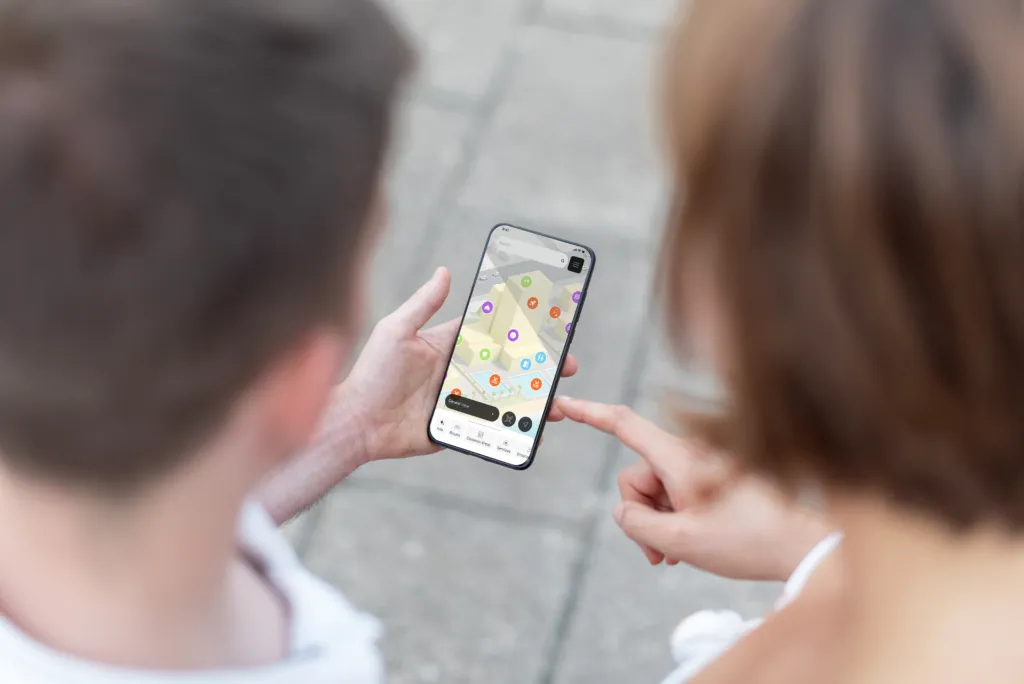

In commercial spaces, events, and complex environments, the management of areas and activities is often fragmented. This limits the ability to fully leverage spaces and connect them to concrete business functions.
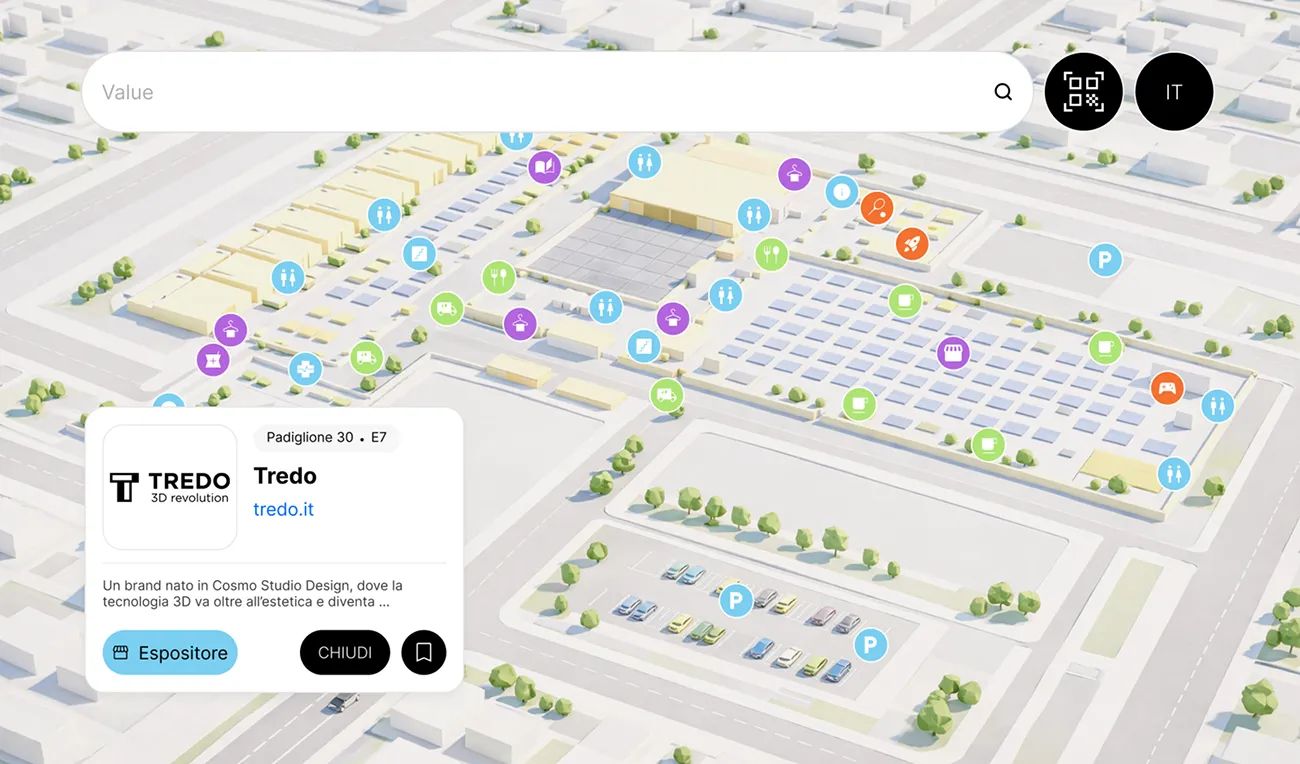
The 3D map introduces a different model: it represents space digitally and allows each area to be linked to operational functions, services, and marketing opportunities.
The result is a space that is more readable and more usable, both from an operational and commercial perspective.
We’ve identified 3 + 1 key opportunities.
1. Premium visibility for brands, sponsors, and partners
Digital spaces become a visibility channel for brands and partners.
The 3D map enables premium commercial positioning, where selected brands can be highlighted over other elements within the space.
In particular, it allows you to:
- Show premium brands prominently, before other map elements
- Increase visibility of promotions and offers through featured placements
- Use custom 3D brand models to strengthen presence and recognition in the digital environment
2. Space booking and Pre-Sale
On request, it is possible to manage space booking by turning venues into a true digital inventory, organized and bookable according to different usage types.
Space is no longer just a physical resource, but a digital asset that can be accessed and configured.
Example of use in various industries:
- Trade fairs and industry events
Exhibitors can select and configure booths remotely and find the same layout during the event. - Shopping malls
Brands and retailers can book temporary spaces and manage their presence both before and during activation. - Stadiums and arenas
The map enables the booking of seats or dedicated areas and supports the on-site event experience.
3. 3D visualization and configuration
The map allows you to showcase spaces or products and customize them in 3D, simplifying booking and online purchasing.
3D Viewer
Explore products and spaces from any angle and use animations and interactive hotspots.
3D Configurator
Customize in real time using variables, colors, and textures and complete the experience with booking or direct purchase.
+1. Data analysis and visitor behavior
The 3D map can be enhanced with physical and digital products that complete the experience.
- Digital kiosks
Allow users to access the 3D map on-site via touch totems, with real-time information on services, routes, and promotions - People-counting devices
High-precision 3D sensors that detect visitor flows and density, enabling analysis of real behavior and supporting space management - Beacon technology
A location-based communication system that sends personalized content and notifications based on visitor position, enabling targeted and contextual communication
Industries where 3D map opportunities can be applied
The solution is ideal for industries where space is complex and central to operations, allowing the integration of management, data, and marketing into a single system:
- Trade fairs and events: booking and custom configuration of booths and exhibition areas.
- Shopping malls: flow analysis with people counters and access via digital kiosks.
- Stadiums and arenas: seat booking directly through the platform using the 3D map.
- Airports: flow and information management to optimize routes and services.
- City-wide events: commercial visibility for brands, sponsors, and partners across distributed spaces.
A 3D map for new business opportunities
The integration of 3D maps with analysis and interaction tools transforms physical space into a structured digital environment.
Each area becomes part of a system where organization, communication, and data are interconnected and operational, unlocking new business opportunities.